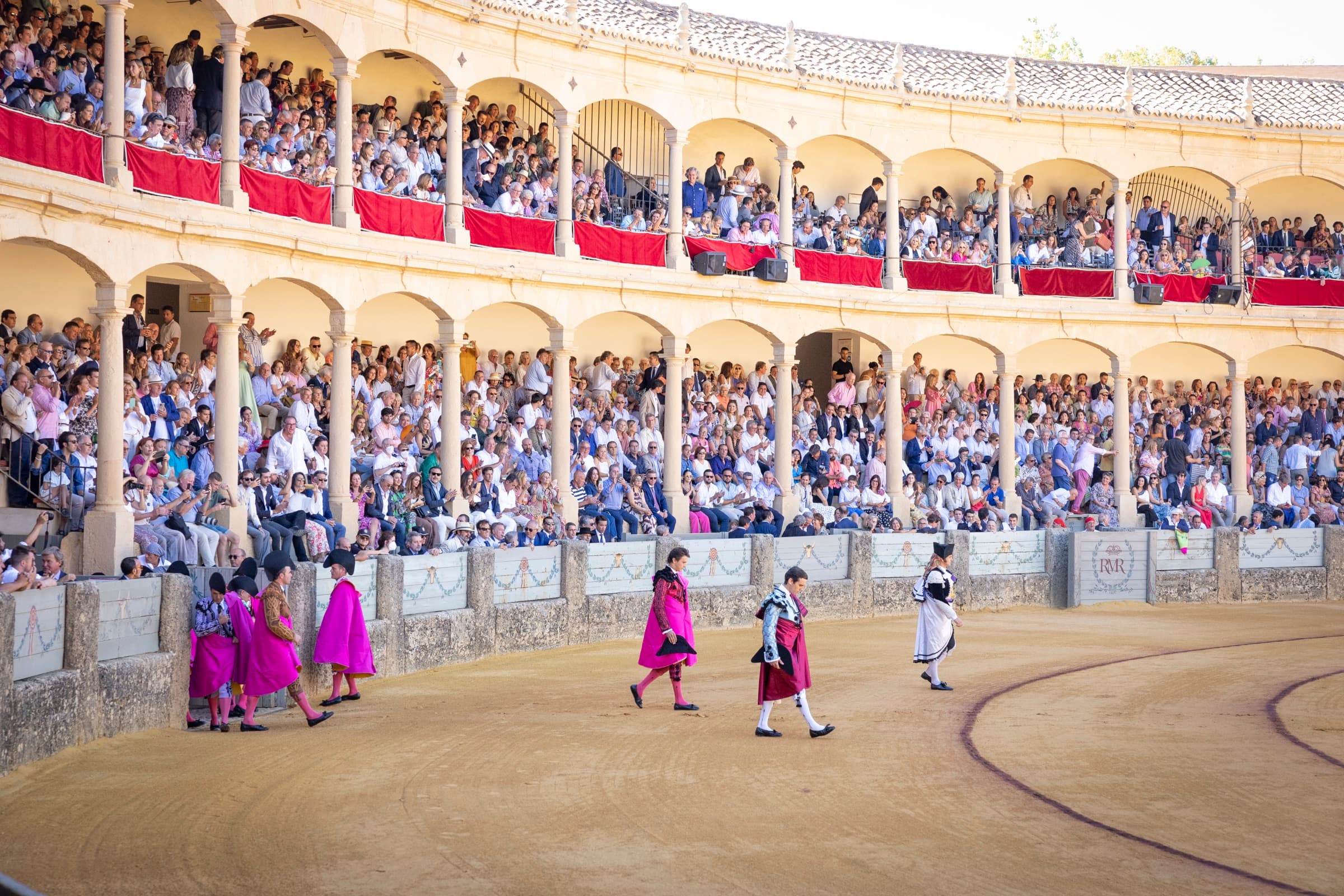
The Ronda Bullring
Opened in 1785 and listed as a Site of Cultural Interest, it is one of the oldest bullrings in Spain.
- 1785
- Year opened
- 66 m
- Ring diameter
- 68
- Arches of the double gallery
- 5,000
- Seats
Sandstone and a double gallery of arcades
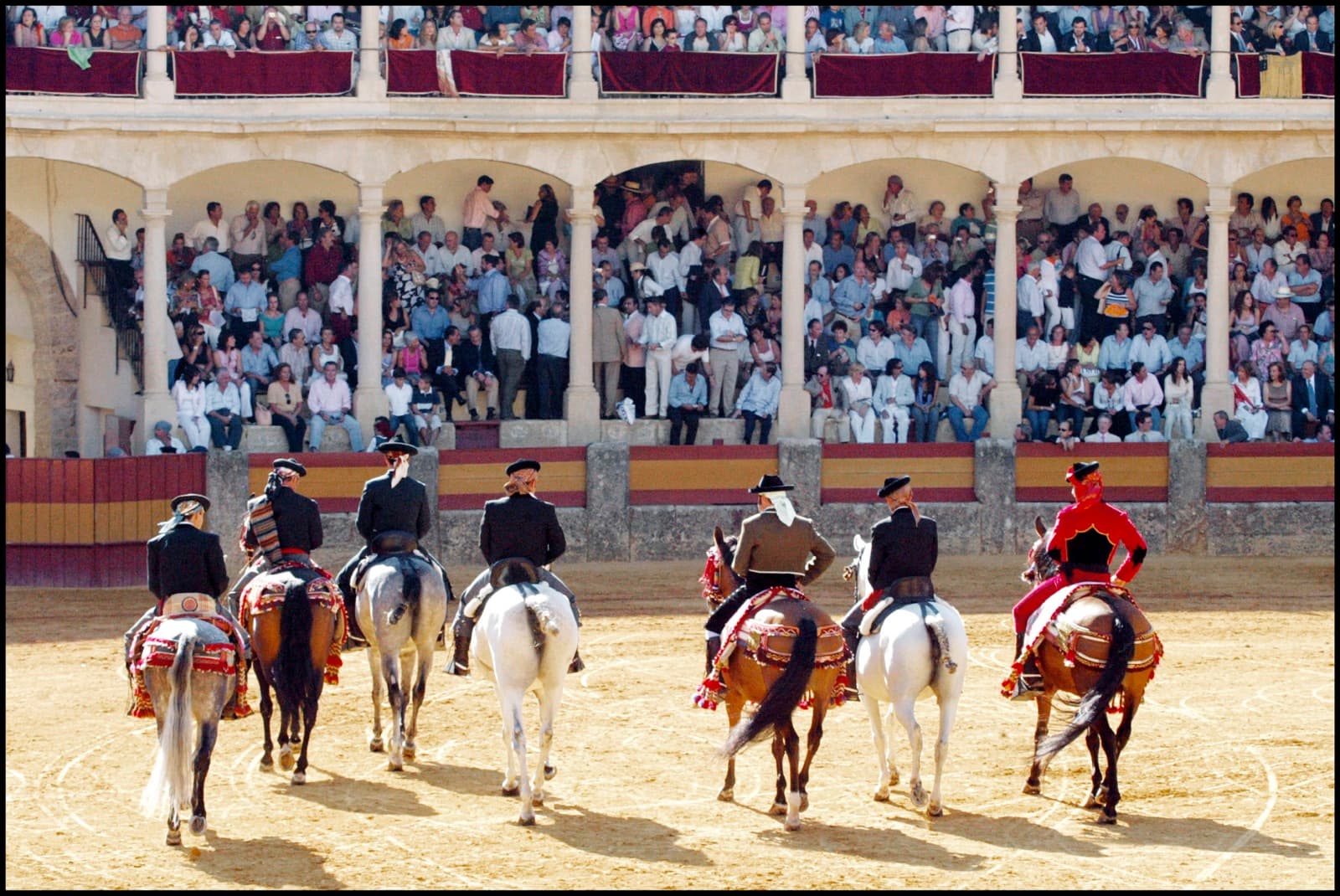
The work, attributed to Martín de Aldehuela, who also designed the Puente Nuevo, began in 1780 and was completed in 1785. The bullring opened that year with a corrida featuring Pedro Romero and Pepe-Hillo.
Built in sandstone to a monumental design, its double gallery of arcades —136 Tuscan columns forming 68 arches, except for that of the Royal Box— and the absence of uncovered stands give it more the spirit of a cloister than of a venue for spectacles. The roof is pitched and tiled with Arabic tiles.
Sixty-six metres across
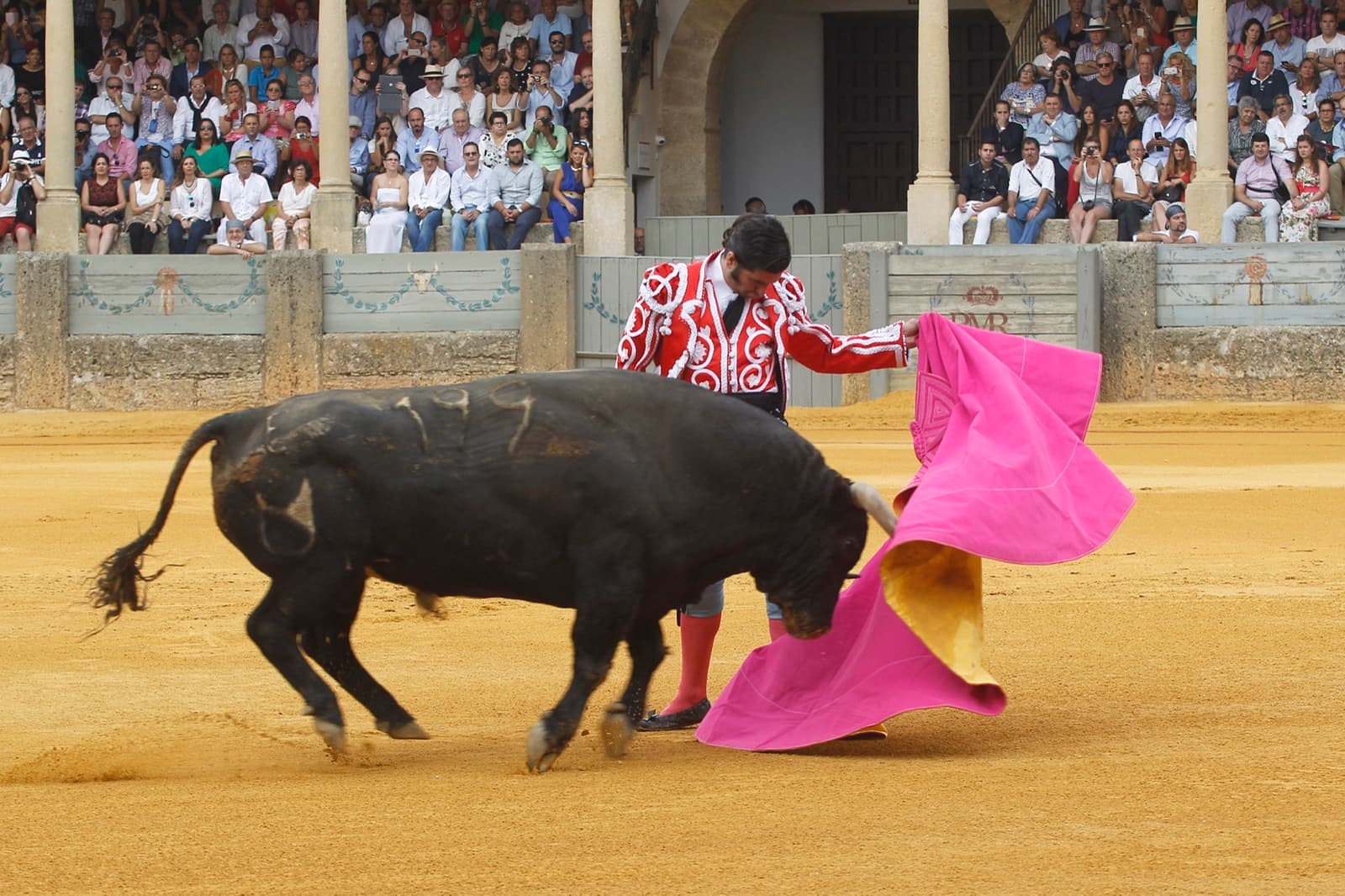
The ring, 66 metres in diameter, is considered the widest in the world and is surrounded by a passageway formed by two stone rings.
The stands, on two tiers and under cover, are numbered 1 to 4. Beneath them lies the Museum of the Real Maestranza de Caballería de Ronda.
The Ronda school
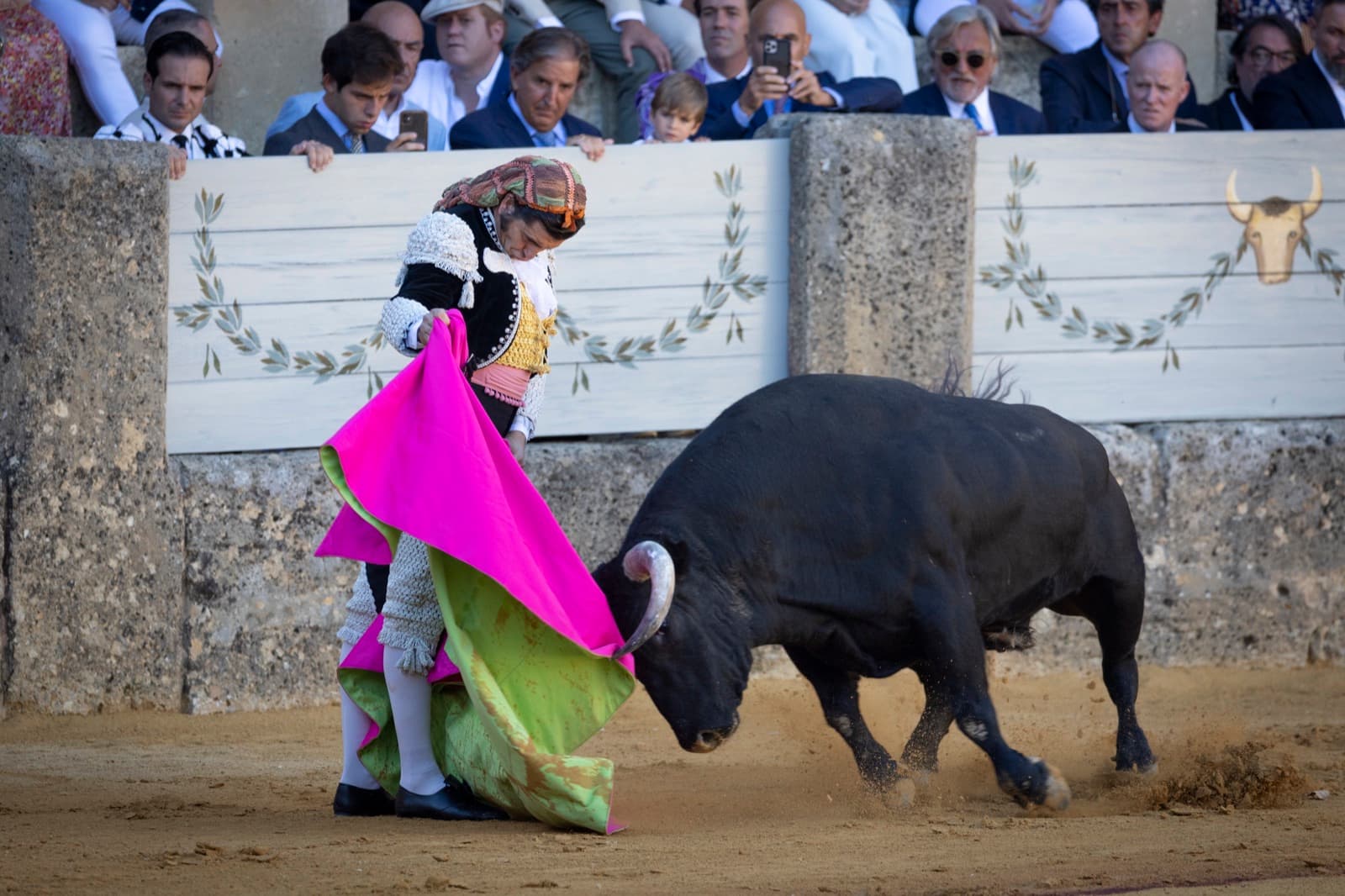
Pedro Romero (1754-1839), a towering figure in the history of bullfighting, retired after killing more than 5,600 bulls without injury. With the Romeros, three generations of Ronda bullfighters, bullfighting on foot took over from the horsemen and became a codified art.
His rivalry with Costillares and Pepe-Hillo opened the contest between the two oldest schools of bullfighting, Seville and Ronda. The Pedro Romero Fair takes its name from him and, with his bicentenary in 1954, so did the Corrida Goyesca.